Home Service Blog Contact

Snipptech: Your Trusted Ecommerce Advertising Agency in USA for Online Growth

The U.S. ecommerce market has become one of the most competitive digital marketplaces in the world. Consumers are discovering products through Google searches, social media, online marketplaces, creator content, display ads, and personalized recommendations. For ecommerce brands, this means that simply having an online store is no longer enough. Brands need a clear acquisition strategy that connects advertising, customer experience, conversion, and long-term growth.

The scale of the U.S. market demonstrates the opportunity. According to the U.S. Census Bureau, U.S. retail ecommerce sales reached an estimated $340.2 billion in Q2 2026, representing 17.1% of total U.S. retail sales. Ecommerce sales were also 12.2% higher than in Q2 2025.

At the same time, U.S. digital advertising continues to expand. The IAB/PwC Internet Advertising Revenue Report states that U.S. internet advertising revenue reached $294.6 billion in 2025, growing 13.9% year over year.

This combination of growing ecommerce activity and increasing digital advertising investment creates significant opportunities for brands—but also makes competition for customer attention more intense.

That is where the right ecommerce advertising agency in USA can play an important role.

U.S. Ecommerce & Digital Advertising at a Glance

The following figures provide useful context for brands considering ecommerce advertising and growth strategies:

  • $340.2 billion: Estimated U.S. retail ecommerce sales in Q2 2026.
  • 17.1%: Share of total U.S. retail sales represented by ecommerce in Q2 2026.
  • 12.2%: Year-over-year increase in U.S. ecommerce sales in Q2 2026.
  • $294.6 billion: U.S. internet advertising revenue in 2025.
  • 13.9%: Year-over-year growth in U.S. internet advertising revenue in 2025.
  • $117.7 billion: U.S. social advertising revenue in 2025.
  • $114.2 billion: U.S. search advertising revenue in 2025.
  • $63.4 billion: U.S. commerce media revenue in 2025.

These figures show why ecommerce brands need to think carefully about where and how they invest their marketing budgets.

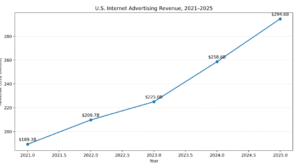
U.S. Internet Advertising Revenue, 2021–2025

5

The chart above is based on IAB/PwC’s reported U.S. internet advertising revenue figures for 2021–2025. The data increased from $189.3 billion in 2021 to $294.6 billion in 2025.

Download the royalty-free chart created for this article: U.S. Internet Advertising Revenue Chart

What Does an Ecommerce Advertising Agency Do?

An ecommerce advertising agency helps online businesses use paid digital channels to reach relevant audiences and generate measurable business outcomes.

Depending on the brand and its goals, this can include:

  • Google Search Ads
  • Google Shopping campaigns
  • Meta advertising
  • Instagram advertising
  • Facebook advertising
  • Retargeting campaigns
  • Display advertising
  • Performance marketing
  • Product-focused campaigns
  • Audience targeting
  • Campaign analytics and optimization

However, effective advertising is not simply about putting more money behind campaigns.

A good strategy considers the complete customer journey.

A customer might discover a product on Instagram, search for the brand on Google, visit the website, compare products, leave the website, and return through a remarketing campaign before finally making a purchase.

Therefore, advertising needs to work together with the website, product pages, offers, content, analytics, and customer experience.

Why U.S. Ecommerce Brands Need a Strategic Advertising Approach

The U.S. market has millions of businesses competing for online attention. As digital advertising continues to grow, brands need to become more intentional about how they allocate their budgets.

The objective should not simply be:

“Get more clicks.”

Instead, ecommerce brands should ask:

  • Are we reaching the right customers?
  • Are our advertisements communicating the right value?
  • Are visitors landing on relevant product pages?
  • Are product pages converting traffic effectively?
  • Which campaigns generate actual purchases?
  • What is the cost of acquiring a customer?
  • Which customers return and purchase again?

These questions help shift the focus from advertising activity to business outcomes.

Snipptech’s Approach to Ecommerce Advertising

As an ecommerce advertising agency in USA, Snipptech can help brands approach online advertising as part of a broader growth strategy rather than treating individual campaigns as isolated activities.

The process starts with understanding the business.

Different ecommerce brands have different:

  • Products
  • Customers
  • Price points
  • Margins
  • Purchase cycles
  • Competitors
  • Market positioning
  • Growth objectives

A strategy that works for a fashion ecommerce brand may not work for a SaaS product, beauty brand, furniture business, or electronics store.

Snipptech’s ecommerce-focused approach can therefore be built around the individual requirements of the business.

1. Identifying the Right Advertising Channels

Not every ecommerce brand needs to advertise on every platform.

Google can be particularly useful for capturing existing search demand, while social platforms can help brands introduce products to potential customers through visual and interest-based advertising.

A broader strategy may include:

Google Ads

Useful for reaching people who are already searching for specific products, services, or brands.

Google Shopping

Product-focused campaigns can help shoppers discover products while comparing options.

Meta Advertising

Facebook and Instagram can be valuable for visual product discovery, audience development, and remarketing.

Retargeting

Retargeting allows brands to reconnect with people who previously visited the website or interacted with products.

The right combination depends on the product, audience, buying journey, and campaign objectives.

2. Building a Strong Customer Acquisition Strategy

Customer acquisition is one of the central components of ecommerce growth.

A brand needs to understand how much it can reasonably spend to acquire a customer while maintaining healthy economics.

Important metrics include:

  • Customer acquisition cost
  • Conversion rate
  • Average order value
  • Revenue
  • Return on ad spend
  • Add-to-cart rate
  • Checkout rate
  • Repeat purchase rate

Looking at these metrics together gives brands a clearer understanding of campaign performance.

For example, a campaign with a high number of clicks may appear successful at first. But if those visitors rarely purchase, the campaign may require optimization.

On the other hand, a campaign with fewer clicks but stronger purchase intent may generate more meaningful revenue.

3. Optimizing Ecommerce Product Pages

Advertising can bring potential customers to a website, but the product page plays a major role in what happens next.

A well-structured product page should make important information easy to find.

This can include:

  • Clear product photography
  • Strong product descriptions
  • Pricing
  • Product benefits
  • Size information
  • Specifications
  • Reviews
  • Delivery details
  • Return information
  • FAQs
  • Clear calls to action

If a brand increases advertising traffic without addressing conversion barriers, the additional traffic may not produce proportional revenue growth.

That is why ecommerce advertising and conversion optimization should work together.

4. Using Retargeting to Reconnect With Interested Customers

Not every customer buys during their first visit.

Someone may browse a product today and return several days later. Another customer may add an item to their cart but leave before completing checkout.

Retargeting can help ecommerce brands stay connected with these potential customers.

Different audiences can receive different messages based on their previous interaction.

For example:

Product viewers: Show relevant products again.

Cart abandoners: Remind them about the product they considered.

Previous customers: Introduce complementary or new products.

This creates a more personalized advertising journey.

5. Combining Paid Advertising With Ecommerce SEO

Paid advertising can help brands generate immediate visibility, while SEO can contribute to longer-term organic discovery.

These channels can also provide useful insights for each other.

Advertising data may reveal:

  • High-intent search terms
  • Popular products
  • Strong customer interests
  • Effective messaging
  • Product categories generating demand

These insights can help inform ecommerce SEO, category pages, product descriptions, blogs, FAQs, and other organic content.

This creates a more connected digital marketing strategy.

Why Choose Snipptech?

Choosing an ecommerce marketing agency USA is not only about finding someone who can launch campaigns.

Brands also need a partner that understands how advertising fits into the wider ecommerce journey.

Snipptech focuses on connecting:

Advertising + Customer Acquisition + Conversion + Analytics + Ecommerce Growth

This broader approach helps brands look beyond individual campaign metrics and understand how marketing activity contributes to the overall business.

For a growing ecommerce business, this can be particularly important when entering a competitive market such as the United States.

The Bigger Picture: Ecommerce Growth in the USA

The U.S. ecommerce environment continues to expand.

The Census Bureau’s Q2 2026 figures show ecommerce sales at $340.2 billion for the quarter, with ecommerce representing 17.1% of total retail sales.

Meanwhile, IAB/PwC reported that U.S. internet advertising revenue reached $294.6 billion in 2025. Social advertising generated $117.7 billion, search generated $114.2 billion, and commerce media generated $63.4 billion.

These figures demonstrate the scale of the opportunity, but they also highlight the importance of strategy.

Growth does not come simply from increasing advertising spend. It comes from understanding customers, selecting appropriate channels, creating relevant messaging, improving conversion experiences, and continuously evaluating performance.

Final Thoughts

For ecommerce brands operating in the United States, digital advertising can be a powerful customer acquisition channel. But successful ecommerce marketing requires more than simply launching ads.

Brands need a connected strategy that considers the customer from the first interaction through purchase and beyond.

As an ecommerce advertising agency in USA, Snipptech can help businesses develop strategies around advertising, customer acquisition, conversion optimization, remarketing, analytics, and broader ecommerce growth.

Whether your brand is launching in the U.S., expanding an existing ecommerce business, or looking for better performance from current campaigns, having a structured strategy can help turn digital traffic into more meaningful business opportunities.

Frequently Asked Questions

What is an ecommerce advertising agency?

An ecommerce advertising agency helps online businesses promote their products through digital advertising channels such as Google, Shopping, Meta, social media, display, and retargeting campaigns.

Why should a U.S. ecommerce brand work with an advertising agency?

An agency can bring specialized experience in campaign strategy, audience targeting, creative testing, optimization, analytics, and customer acquisition, helping brands develop a more structured approach to paid advertising.

What services does an ecommerce advertising agency provide?

Services can include Google Ads, Google Shopping, Meta Ads, retargeting, performance marketing, campaign optimization, audience research, conversion optimization, analytics, and ecommerce growth strategy.

How does Snipptech help ecommerce brands in the USA?

Snipptech can help ecommerce brands develop advertising and growth strategies based on their products, target audience, business objectives, customer acquisition goals, and performance data.

Does Snipptech provide ecommerce growth services?

Yes. Snipptech ecommerce growth services can be structured around customer acquisition, paid advertising, conversion optimization, remarketing, analytics, and other activities that support online business growth.

Is Google Ads enough for ecommerce growth?

Google Ads can be an important channel, but depending on the business, an ecommerce strategy may also include Shopping, Meta advertising, remarketing, SEO, conversion optimization, and retention initiatives.

How important is retargeting for ecommerce?

Retargeting can help brands reconnect with people who have already interacted with their website or products. It can be particularly useful for customers who have viewed products or abandoned their shopping carts.

Can a small ecommerce brand use an ecommerce advertising agency?

Yes. Smaller brands can use an agency to develop a structured advertising strategy, identify appropriate channels, track performance, and make informed decisions about where to allocate their marketing budget.

Ready to Grow Your Ecommerce Brand in the USA?

Your ecommerce store deserves more than random advertising campaigns. Build a strategy around the right audience, the right channels, and measurable business goals.

Connect with Snipptech to explore ecommerce advertising and growth opportunities for your brand in the USA.
 

What Are the Biggest Digital Marketing Trends in 2026?

What Are the Biggest Digital Marketing Trends in 2026?

Digital marketing is changing faster in 2026 than it has in many previous years. Search behavior is shifting toward AI-powered platforms, social media is becoming a discovery and shopping channel, video continues to attract significant advertising investment, and marketers are placing greater emphasis on first-party data, personalization, automation, and measurable business outcomes.

For businesses, this means that simply following the same digital marketing strategies used in previous years may not be enough. The focus is increasingly moving from generating clicks and impressions to understanding how customers discover brands, how they research products, and what ultimately influences a purchase.

The U.S. market provides a useful view of this shift. U.S. internet advertising revenue reached $294.6 billion in 2025, growing 13.9% year over year. Social advertising reached $117.7 billion, search advertising reached $114.2 billion, and digital video advertising reached $78 billion.

What Are the Biggest Digital Marketing Trends in 2026?

What Are the Biggest Digital Marketing Trends in 2026?

What Are the Biggest Digital Marketing Trends in 2026?

U.S. Digital Marketing at a Glance

The numbers show how significant digital channels have become for U.S. businesses.

  • $294.6 billion — U.S. internet advertising revenue in 2025
  • 13.9% — year-over-year growth in U.S. internet advertising revenue
  • $117.7 billion — U.S. social advertising revenue
  • $114.2 billion — U.S. search advertising revenue
  • $78 billion — U.S. digital video advertising revenue
  • $63.4 billion — U.S. commerce media revenue
  • $162.4 billion — U.S. programmatic advertising revenue in 2025

The Interactive Advertising Bureau also raised its forecast for 2026 U.S. advertising spend growth to 12.3%, citing stronger-than-expected first-half performance and continued changes in how consumers discover, evaluate, and choose brands.

U.S. Internet Advertising Revenue, 2021–2025

What are the biggest digital marketing trends in 2026?

Original chart created for this article using IAB/PwC reported U.S. internet advertising revenue data.

The growth from $189.3 billion in 2021 to $294.6 billion in 2025 demonstrates how quickly the U.S. digital advertising ecosystem has expanded.

1. AI Is Becoming a Core Part of Digital Marketing

One of the biggest AI marketing trends in 2026 is the movement from experimenting with AI to integrating it into everyday marketing operations.

AI is now being used across research, content workflows, audience analysis, customer service, personalization, campaign optimization, creative development, and data analysis.

Experian’s 2026 digital trends research reports that 94% of marketers are investing broadly in AI to drive efficiency and impact. The report also highlights the growing importance of connecting AI with data, measurement, and marketing outcomes.

However, AI should not simply mean producing large volumes of automated content.

The more important opportunity is using AI to help marketers work with existing customer and business data more effectively. For example, AI can help identify patterns in customer behavior, segment audiences, analyze campaign performance, summarize research, personalize experiences, and support faster decision-making.

This makes AI-driven digital marketing one of the defining digital marketing trends for businesses in 2026.

2. AI Search Is Changing SEO and Customer Discovery

Another major digital marketing trend in 2026 is the growth of AI-powered search and conversational discovery.

Consumers increasingly use AI tools to research products, compare businesses, understand complex topics, and create shortlists before visiting a traditional website.

HubSpot’s 2026 marketing research reports that half of consumers surveyed use AI-powered search, while half of Google searches include an AI Overview.

This is changing the way businesses think about SEO.

Traditional SEO remains important, but marketers are increasingly considering AI search optimization, Answer Engine Optimization (AEO) and Generative Engine Optimization (GEO).

The goal is not simply to rank a webpage for a keyword. Brands also need content that clearly answers questions, demonstrates expertise, provides trustworthy information, and can potentially be understood and referenced by AI-powered search systems.

This means AI SEO trends 2026 are closely connected with traditional technical SEO, high-quality content, structured information, entity understanding, and brand authority.

3. Search Is Becoming More About Visibility Than Just Clicks

One of the most important changes in the future of digital marketing in 2026 is how marketers measure search performance.

Huble’s 2026 analysis highlights the shift toward zero-click experiences and AI-generated answers, arguing that visibility within search and AI environments can matter even when a user does not immediately click through to a website.

This does not mean website traffic is no longer important.

Instead, marketers need to look at a broader set of signals.

A brand may be discovered through an AI answer, remembered by the customer, searched directly on Google later, and eventually converted through a website visit.

As a result, digital marketing strategies 2026 need to consider brand visibility, branded searches, organic traffic, direct traffic, conversions, assisted conversions, and revenue rather than focusing on one metric alone.

4. Short-Form Video Continues to Grow

Video remains one of the most important social media marketing trends 2026.

Short-form video has become an important format for product discovery, education, entertainment, creator marketing, and brand storytelling.

The U.S. digital advertising data reinforces this trend. Digital video advertising revenue reached $78 billion in 2025, increasing 25.4% year over year according to IAB/PwC.

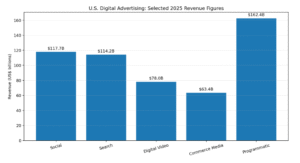
U.S. Digital Advertising: Selected 2025 Revenue Figures

What are the biggest digital marketing trends in 2026?

Original chart created for this article using IAB/PwC reported U.S. advertising data.

For marketers, video is no longer limited to traditional brand campaigns. Businesses can use short videos for product demonstrations, customer education, testimonials, behind-the-scenes content, FAQs, tutorials, and creator collaborations.

The key is making the content useful rather than producing video simply because it is popular.

5. Social Media Is Becoming a Search and Shopping Channel

Social media platforms are increasingly functioning as discovery engines.

Consumers can discover a product, watch a review, compare alternatives, interact with a creator, visit a product page, and sometimes complete a purchase without leaving the platform.

This is why social commerce trends 2026 and social search 2026 are becoming important parts of digital marketing planning.

IAB/PwC reported that U.S. social advertising revenue reached $117.7 billion in 2025, growing 32.6% year over year. The organization linked growth partly to creator-economy expansion, commerce integration, and improvements in targeting, measurement, and attribution.

For brands, social media therefore needs to be viewed as more than a platform for posting updates.

It can support awareness, discovery, community building, customer service, product research, remarketing, and sales.

6. First-Party Data Is Becoming More Important

Another major digital marketing trend 2026 is the increased importance of first-party data.

As privacy expectations evolve and marketers face limitations around certain third-party data practices, businesses are paying greater attention to information they collect directly from customers.

This can include website interactions, purchase history, newsletter subscriptions, customer preferences, loyalty activity, CRM information, and consented behavioral data.

Experian reports that 70% of B2B marketers plan to increase their use of first-party data, making it one of the important areas of focus in its 2026 trends research.

First-party data can also improve personalization.

Instead of delivering the same message to everyone, brands can create more relevant experiences based on customer interests, previous interactions, purchase behavior, or stage in the buying journey.

7. Personalization Is Moving Beyond Basic Recommendations

Personalization has been discussed in digital marketing for years, but personalization trends in marketing are becoming more sophisticated in 2026.

Customers increasingly expect businesses to understand their needs and provide relevant experiences.

Personalization can appear across:

  • Website experiences
  • Email campaigns
  • Product recommendations
  • Advertising
  • Landing pages
  • Customer support
  • Retargeting
  • Offers and promotions

AI is making it easier for marketers to process larger amounts of customer information and create more relevant experiences at scale.

However, effective personalization depends on accurate and responsibly managed data. Poor-quality customer data can lead to irrelevant recommendations and a frustrating experience.

8. Performance Marketing Is Becoming More Outcome-Focused

The growth of digital advertising is also increasing pressure on marketers to demonstrate business value.

IAB reported that U.S. programmatic advertising revenue reached $162.4 billion in 2025, up 20.5% year over year.

At the same time, marketers are paying closer attention to customer acquisition cost, return on ad spend, conversion rates, lifetime value, revenue, and retention.

This makes performance marketing trends 2026 less about generating the largest possible volume of traffic and more about understanding which activities contribute to meaningful business results.

For ecommerce brands, this can mean connecting advertising data with product margins, average order value, repeat purchases, and customer lifetime value.

9. Commerce Media Is Becoming a Bigger Advertising Opportunity

Commerce media is another important area to watch.

U.S. commerce media revenue reached $63.4 billion in 2025, growing 18% year over year according to IAB/PwC.

Commerce media allows advertising to connect more closely with shopping environments and purchase-related data.

This is particularly relevant for retailers, marketplaces, ecommerce brands, and businesses with strong transactional customer data.

As ecommerce and advertising become more connected, marketers can increasingly use shopping behavior to understand audiences and create more relevant advertising experiences.

10. Measurement Is Becoming More Complex

Perhaps the biggest lesson from the latest digital marketing trends 2026 is that measurement is becoming more complicated.

A customer journey may now involve Google, an AI search platform, Instagram, YouTube, a marketplace, a brand website, an email, and a remarketing campaign.

Attributing the final purchase to only one channel can therefore provide an incomplete picture.

Marketers need to understand how different channels contribute throughout the customer journey.

This means dashboards increasingly need to bring together SEO, paid advertising, social media, CRM, ecommerce, analytics, and conversion data.

The objective is not simply to know where the customer clicked, but to understand what influenced the customer to make a decision.

What Do These Digital Marketing Trends Mean for Businesses?

The biggest digital marketing trends in 2026 are connected.

AI is changing search.

Search is changing how people discover brands.

Social media is becoming a discovery and shopping environment.

Video is capturing increasing advertising investment.

First-party data is becoming more valuable.

Personalization is becoming more sophisticated.

And measurement is moving toward business outcomes rather than isolated channel metrics.

For businesses, the response does not necessarily need to be investing in every new platform.

Instead, companies should evaluate where their customers actually spend time, how they search for information, which content formats influence them, and which channels contribute to revenue.

A strong digital marketing strategy for 2026 should therefore combine the right mix of SEO, AI search optimization, content marketing, social media, paid advertising, video, first-party data, personalization, analytics, and conversion optimization.

Frequently Asked Questions

What are the biggest digital marketing trends in 2026?

The major digital marketing trends 2026 include AI-powered marketing, AI search optimization, AEO and GEO, short-form video, social commerce, first-party data, personalization, performance marketing, commerce media, and more advanced measurement.

Is SEO still important in 2026?

Yes. SEO continues to play an important role in organic discovery, but the search environment is evolving. Businesses increasingly need to consider traditional search rankings alongside AI-generated answers, zero-click experiences, structured content, and brand visibility across AI search platforms.

How is AI changing digital marketing in 2026?

AI is being used for marketing analysis, automation, personalization, content workflows, campaign optimization, customer service, research, and search experiences. Experian reports that 94% of marketers are investing broadly in AI.

What are the biggest social media marketing trends in 2026?

Important trends include short-form video, social search, social commerce, creator marketing, personalization, community building, and AI-assisted content workflows.

Why is first-party data important in 2026?

First-party data gives businesses information collected directly through their own customer relationships and digital properties. It can support personalization, customer segmentation, measurement, and more relevant marketing experiences.

Is video marketing still effective in 2026?

Video remains an important digital marketing format. U.S. digital video advertising revenue reached $78 billion in 2025 and grew 25.4% year over year according to IAB/PwC.

What should businesses focus on in their digital marketing strategy for 2026?

Businesses should focus on understanding their customers, building strong first-party data foundations, creating useful content, improving search visibility across traditional and AI search, using video and social channels strategically, and measuring marketing against meaningful business outcomes.

Ready to Adapt Your Digital Marketing Strategy for 2026?

The digital landscape is changing, but businesses do not need to chase every new trend. The real opportunity is to understand which digital marketing trends in 2026 are relevant to your audience and connect them into a measurable strategy.

From AI marketing and SEO to social media, content, paid advertising, personalization, and performance marketing, the right combination can help your brand build stronger visibility and create more meaningful customer journeys.

Ready to prepare your business for the next stage of digital marketing? Connect with Snipptech to explore a data-driven digital marketing strategy built around your business goals, audience, and growth opportunities.


LLM SEO: A Practical Guide to Optimizing Content for AI Search

Search is changing from a system where users primarily browse a list of blue links into an environment where AI systems can interpret questions, summarize information, compare sources, and provide direct answers. This shift is creating a new consideration for SEO professionals and content teams: how can a website become visible when the answer is generated by an AI model rather than presented as a traditional search result?

That is where LLM SEO comes into the picture.

LLM SEO focuses on making website content easier for large language models (LLMs) to understand, interpret, retrieve, and potentially reference in AI-generated responses. It works alongside traditional SEO rather than replacing it. Search visibility still depends on a website being crawlable, indexable, relevant, authoritative, and useful. However, content also needs to communicate its subject clearly enough for AI systems to understand the entities, relationships, facts, and context behind the page.

The concept is closely related to Generative Engine Optimization (GEO) and Answer Engine Optimization (AEO), although the terms describe overlapping but not identical areas of optimization. The reference material from Elsner similarly distinguishes traditional SEO from optimization focused on AI-generated answers and citations.

LLM SEO: A Practical Guide to Optimizing Content for AI Search | SnippTech

LLM SEO: A Practical Guide to Optimizing Content for AI Search

What Is LLM SEO?

LLM SEO is the process of optimizing website content so that large language models can clearly understand, retrieve, interpret, and potentially reference the information within it.

Traditional SEO primarily aims to improve a webpage’s visibility in search engine results. LLM SEO adds another layer: making information understandable and useful within AI-powered search experiences.

For example, consider a user asking:

“What are the best ways to improve technical SEO for an ecommerce website?”

A traditional search engine may return several relevant webpages.

An AI-powered search experience may instead synthesize information from multiple sources and provide a summarized response. If your website contains clear, authoritative, well-structured information, it may become one of the sources considered by the system.

This means businesses increasingly need to think about how information is presented, not just which keywords appear on a page.

Why Is LLM SEO Becoming Important?

People are increasingly using conversational interfaces to research products, services, companies, and questions.

Instead of searching only with short phrases such as:

“technical SEO ecommerce”

users can ask much more detailed questions:

“What technical SEO problems should I check first on a Shopify store with thousands of product pages?”

The second query contains more context and intent.

AI systems are designed to interpret language and context, which means content needs to communicate ideas in a way that is easy to understand.

This does not mean traditional SEO has become irrelevant. In fact, SEO remains an important foundation because AI-powered search systems still need discoverable and accessible information to retrieve.

Elsner’s reference guide makes a similar distinction between traditional search visibility and visibility within AI-generated responses.

A practical way to think about the relationship is:

SEO → Crawlability + Indexing + Search Visibility

AEO → Direct Answers + Question-Based Content

GEO → Visibility Across Generative Search

LLM SEO → Content That AI Models Can Understand and Use

These approaches can overlap and should generally work together rather than being treated as isolated strategies.

How Do AI Models Find Website Content?

One of the most important concepts in LLM SEO is understanding that not every AI response is generated from the same type of information.

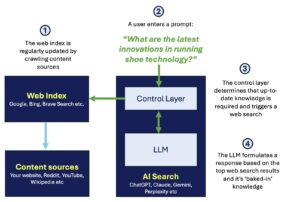
Some information can come from a model’s previously learned knowledge, while other AI search experiences can retrieve information from current webpages when answering a query.

Training Data

Training data refers to information used when developing a model.

Website owners don’t have a direct mechanism for controlling whether a particular future model learns from their pages. Therefore, businesses should not build an SEO strategy around the assumption that publishing something today guarantees that it will become part of a model’s permanent knowledge.

Retrieval

Retrieval is different.

When an AI system can access current information, it may search or retrieve relevant sources while generating an answer.

This makes traditional SEO fundamentals extremely important.

If your website:

  • Cannot be crawled
  • Has important pages blocked
  • Contains unclear content
  • Has outdated information
  • Provides little original value
  • Has weak topical authority

then an AI system may have less useful information to retrieve from your website.

Elsner’s reference article emphasizes this distinction between static training knowledge and retrieval from currently available sources.

1. Make Your Main Topics and Entities Clear

One of the foundations of LLM SEO optimization is entity consistency.

An entity can be a:

  • Brand
  • Person
  • Product
  • Service
  • Organization
  • Location
  • Technology
  • Industry concept

Suppose a company calls one product “Pro SEO Audit” on its homepage, “Professional SEO Analysis” on its services page, and “SEO Website Audit Package” on another page.

These phrases may describe the same service, but inconsistent naming can make the relationship between the pages less obvious.

Businesses should establish consistent terminology across:

  • Homepage
  • Service pages
  • Product pages
  • Blog content
  • About page
  • Author profiles
  • Structured data
  • Social profiles

This helps search engines and AI systems build a clearer understanding of what the business actually offers.

Practical example

Instead of repeatedly using vague phrases such as:

“our advanced solution”

clearly identify the entity:

“Our technical SEO audit evaluates crawlability, indexation, canonicalization, structured data, Core Web Vitals, and internal linking.”

The second version gives a system more useful information to interpret.

2. Structure Content for Direct Answers

AI systems need to identify useful information efficiently.

That makes content structure particularly important.

Instead of writing long introductions before answering a question, start the relevant section with a direct explanation.

For example:

Weak structure

Several paragraphs discussing search trends → general background → marketing discussion → finally the definition.

Clear structure

What is LLM SEO?

LLM SEO is the process of optimizing content so AI systems can understand and potentially reference information from a website.

Then explain:

  • How it works
  • Why it matters
  • Examples
  • Implementation
  • Limitations

This structure benefits users as well as AI systems.

Use descriptive headings such as:

  • What Is LLM SEO?
  • How Does LLM SEO Work?
  • How Can You Optimize Content for AI Search?
  • What Is the Difference Between GEO and LLM SEO?
  • How Do You Measure AI Search Visibility?

Question-based headings can make a page easier to navigate and can align content with conversational search behavior.

3. Build Content Around Topics, Not Keyword Variations

One of the biggest mistakes in AI search optimization is treating LLM SEO as simply another keyword-stuffing technique.

Repeating:

LLM SEO, LLM SEO strategy, LLM SEO services, LLM SEO optimization

throughout an article does not automatically make the content more useful.

Instead, build comprehensive topical coverage.

For an article about LLM SEO, related concepts might include:

  • AI search
  • Large language models
  • Generative search
  • GEO
  • AEO
  • AI Overviews
  • Search intent
  • Entity optimization
  • Structured data
  • Content authority
  • Citations
  • Retrieval
  • Semantic search
  • E-E-A-T
  • Knowledge graphs

The objective is to explain the topic comprehensively while maintaining natural language.

4. Give AI Systems Information Worth Referencing

If every website publishes essentially the same generic explanation, there is little reason for an AI system to prefer one source over another.

This is why original and genuinely useful information can become an important part of an LLM SEO strategy.

Consider adding:

Original Research

Publish data collected from your own customers, campaigns, surveys, or website analysis.

Original Examples

Instead of repeating generic advice, demonstrate how a specific SEO issue was identified and resolved.

Expert Insights

Include information from people with relevant experience and clearly identify the author or contributor.

Proprietary Frameworks

If your company has a unique process, explain it.

Case Studies

Show what changed, what was tested, and what the outcome was.

This approach gives your content information that is more distinctive than another rewritten version of the same commonly available article.

Elsner’s current guide similarly emphasizes original data, frameworks, documented processes, and useful information as potential sources of citable value.

5. Strengthen Your Website’s Authority Beyond Your Own Pages

LLM SEO isn’t only about what your company says about itself.

Your broader online presence can also matter.

For example, a business may have:

  • Industry publications mentioning the brand
  • Relevant third-party reviews
  • Expert interviews
  • Guest contributions
  • Industry directories
  • Partnerships
  • Digital PR coverage
  • Author profiles
  • Relevant backlinks

Imagine two businesses publish similar articles.

One has little information about it outside its own website, while the other has consistent references across reputable industry sources.

A search or AI system has more external context available about the second business.

This is why off-page SEO, digital PR, brand mentions, and authority building remain relevant in an AI-search environment.

6. Use Structured Data Carefully

Structured data helps search engines interpret specific information on a webpage.

Depending on the content, relevant schema types may include:

  • Article
  • Organization
  • Product
  • LocalBusiness
  • BreadcrumbList
  • FAQPage
  • Review
  • Person

For example, Product structured data can communicate information such as:

  • Product name
  • Brand
  • Price
  • Availability
  • SKU
  • Review information

For an ecommerce website, this can provide a clearer machine-readable representation of the product.

However, schema should not be treated as a magic technique that guarantees an AI citation.

Its primary value is helping machines interpret the information and relationships represented on the page.

7. Optimize Ecommerce Content for AI Search

Ecommerce businesses have additional opportunities because AI-powered shopping experiences need detailed product information.

A product page should clearly communicate information such as:

Product name → Category → Material → Size → Features → Compatibility → Price → Availability → Shipping → Returns

A vague product description such as:

“Premium, stylish and comfortable product designed for modern customers.”

doesn’t provide much useful information.

A better description explains exactly what the product is, who it is for, its dimensions, materials, use cases, and important specifications.

Optimize Ecommerce Content for AI Search


Product Reviews Can Add More Context

Reviews can also provide useful information because they often describe real-world experiences.

For example, customers might mention:

  • Fit
  • Durability
  • Ease of use
  • Product quality
  • Compatibility
  • Common problems
  • Specific use cases

A business should not manipulate reviews simply to create AI-friendly content. Instead, genuine customer feedback can provide additional context around the product.

Create Useful Buying Guides

Ecommerce websites can also create supporting content such as:

  • Product comparisons
  • Buying guides
  • “How to choose” articles
  • Product FAQs
  • Use-case guides
  • Size guides
  • Compatibility guides

This creates a deeper information ecosystem around the product rather than leaving the AI system with only a short product description.

Elsner’s reference material specifically highlights product data, reviews, comparisons, and category-level buying guidance as important areas for ecommerce-focused LLM SEO.

8. Keep Your Content Fresh and Accurate

AI search is particularly sensitive to topics that change frequently.

Consider information such as:

  • Software pricing
  • Product availability
  • Platform features
  • Search engine updates
  • Regulations
  • Statistics
  • Technology specifications

An article published several years ago may contain information that is no longer correct.

Create a content refresh process.

For example:

Quarterly review: Important evergreen content

Monthly review: Fast-changing technology or product content

Immediate update: Major platform, product, pricing, or policy changes

During a refresh, don’t simply change the publication date. Review the actual information and improve the content where necessary.

9. Create Content Around the Entire Search Journey

A single article rarely answers every question a user has.

Suppose your main topic is:

Technical SEO for Ecommerce

Related questions could include:

  • What is technical SEO?
  • Why is technical SEO important for ecommerce?
  • How do I fix duplicate product pages?
  • How should ecommerce sites handle canonical URLs?
  • How do I optimize product filters?
  • What causes crawl budget issues?
  • How should Shopify sites handle technical SEO?
  • How do I improve ecommerce Core Web Vitals?

Creating useful content around these related questions builds a stronger topic cluster.

Internal links can then connect these pages.

This helps users navigate the subject while giving search engines a clearer understanding of relationships between topics.

LLM SEO vs SEO vs AEO vs GEO

These terms are often used interchangeably, but they can describe different areas of search optimization.

Approach Main Focus
SEO Organic search visibility
AEO Direct answers and answer-focused search
GEO Visibility in generative search experiences
LLM SEO Making content understandable and useful to language models

In practice, these strategies overlap considerably.

A technically strong website with poor content will have problems.

A well-written article that search engines cannot crawl also has limited visibility.

And content that ranks well but provides little useful or distinctive information may not have much value in AI-generated answers.

The strongest approach is therefore to maintain the traditional SEO foundation while improving content clarity, authority, structure, and usefulness for AI-driven discovery.

Common LLM SEO Mistakes to Avoid

Treating LLM SEO as Keyword Stuffing

Adding dozens of AI-related keywords does not make an article more useful.

Publishing Generic AI-Generated Content

Content that simply summarizes information already available across hundreds of websites may struggle to provide a meaningful reason for reference.

Ignoring Traditional SEO

AI search optimization does not eliminate technical SEO, crawlability, indexing, internal linking, or website architecture.

Making Unsupported Claims

If your content includes statistics, research findings, or strong factual claims, provide reliable sources.

Inconsistent Entity Information

Your company name, products, services, locations, and other important entities should be represented consistently.

Creating Thin Content

A 500-word page that barely answers a complex question may not provide enough useful context.

Ignoring Off-Page Authority

Your website isn’t the only source of information about your brand. Relevant external references can contribute to your broader online presence.

How to Measure LLM SEO

Measuring AI search visibility is still developing, so businesses should avoid treating every AI visibility metric as equivalent to traditional Google rankings.

Useful indicators can include:

  • Brand mentions in AI-generated answers
  • Citations of your webpages
  • Referral traffic from AI platforms
  • Branded search growth
  • Organic traffic trends
  • Assisted conversions
  • Mentions across third-party websites
  • Visibility for important conversational queries

You can also perform manual testing.

Create a list of commercially relevant prompts such as:

“Best SEO agencies for ecommerce brands”

“How can an online clothing store improve organic traffic?”

“What should a small business check before investing in SEO?”

Then test these prompts periodically across the AI platforms relevant to your audience.

Record:

  • Whether your brand appears
  • Which competitors appear
  • Which sources are cited
  • Which pages are referenced
  • How your brand is described
  • Whether the information is accurate

This creates a practical baseline for measuring AI-search visibility.

The reference material also notes that AI visibility measurement is still less mature than conventional rank tracking, so current tools should be interpreted as directional rather than treated as perfectly precise measurements.

A Practical LLM SEO Checklist

Before publishing or updating an important page, check the following:

  • Is the main topic immediately clear?
  • Does the introduction answer the primary question?
  • Are important entities named consistently?
  • Are headings descriptive and logical?
  • Does each section provide a useful answer?
  • Are important claims supported by reliable sources?
  • Is the information current?
  • Does the page include original insights or examples?
  • Is relevant schema implemented correctly?
  • Is the page crawlable and indexable?
  • Are related pages connected through internal links?
  • Does the website have relevant external authority?
  • Have you covered important related questions?
  • Have you tested important queries across relevant AI platforms?

The Future of LLM SEO

LLM SEO should not be viewed as a replacement for traditional search engine optimization.

Instead, it is an extension of the broader shift toward AI-powered search and conversational discovery.

People are increasingly asking complete questions rather than simply entering isolated keywords. Search experiences are becoming better at understanding context, combining information, and presenting direct answers.

For businesses, this means content strategy needs to evolve.

The goal is no longer simply to produce a page containing the right keywords. The goal is to create information that is clear, accurate, authoritative, structured, current, and genuinely useful.

That foundation can support visibility across traditional search as well as emerging AI-powered discovery experiences.

Final Thoughts

A strong LLM SEO strategy starts with the same fundamentals that have always mattered in good SEO: technically accessible websites, useful content, strong information architecture, relevant authority, and a clear understanding of user intent.

The difference is that AI search introduces another layer of interpretation.

Your content needs to make sense not only to a person scanning a webpage, but also to systems trying to understand:

What is this page about?

Who or what does it refer to?

Is the information trustworthy?

Does it directly answer the question?

Is there a reason to use this source over another?

Businesses that focus on these fundamentals can build content that is useful across multiple search environments instead of optimizing exclusively for one interface.

Ready to Optimize Your Website for AI Search?

AI search is changing how people discover information, products, and businesses. If your website is still relying only on traditional keyword targeting, it may be time to review your content, technical SEO, entity signals, structured data, and authority strategy.

Need help improving your website’s visibility across traditional and AI-powered search? Get in touch for a customized SEO and AI search optimization strategy designed around your business goals.

Frequently Asked Questions

What is LLM SEO?

LLM SEO is the process of optimizing website content so large language models can understand, retrieve, interpret, and potentially reference the information when generating AI-powered answers.

Is LLM SEO the same as traditional SEO?

No. LLM SEO and traditional SEO overlap, but their primary objectives differ. Traditional SEO focuses heavily on organic search visibility, while LLM SEO focuses on making information understandable and useful within AI-powered search and answer experiences.

Is LLM SEO the same as GEO?

They are closely related but are not necessarily identical. GEO, or Generative Engine Optimization, generally refers to optimizing for visibility across generative search experiences. LLM SEO focuses more specifically on making content understandable and usable by language models.

Does schema guarantee AI citations?

No. Structured data can help search engines interpret information, but it does not guarantee that an AI system will cite or mention a webpage.

How can I make my content more visible in AI search?

Focus on clear answers, consistent entities, strong topical coverage, accurate information, original insights, structured content, technical accessibility, authoritative external references, and appropriate structured data.

Is AI-generated content good for LLM SEO?

The method of producing content is less important than the quality and usefulness of the final content. Pages that provide little original value, contain inaccuracies, or exist primarily to manipulate search visibility can be problematic regardless of whether they were produced manually or with AI assistance.


Building Better Digital Growth: How SnippTech Helps Businesses Move Forward Online

Building Better Digital Growth: How SnippTech Helps Businesses Move Forward Online

Running a business in Los Angeles means competing in a market where customers have more choices than ever. A strong online presence is no longer simply a nice addition to a business—it has become an important part of how people discover brands, evaluate services, and decide where to spend their money.

This is where SnippTech, a digital marketing agency in Los Angeles, California, comes into the picture. The brand brings together website development, paid advertising, ecommerce growth, social media management, SEO, and AI automation under one digital growth-focused approach.

Rather than looking at each online activity as a separate task, SnippTech focuses on building digital solutions that can work together. A website needs to perform well. Marketing campaigns need to reach the right audience. Social media needs to keep the brand connected with customers. SEO needs to build long-term visibility. And when repetitive business processes start taking too much time, automation can help make those operations more efficient.

Website Development Services That Goes Beyond Appearance

A business website is often the first meaningful interaction a potential customer has with a brand. That first impression matters, but a good website needs to do more than simply look attractive.

SnippTech’s Website Development service focuses on creating modern and scalable websites with performance and user experience in mind. The goal is to create a digital platform that feels easy to navigate while giving businesses a strong foundation for future growth.

A well-developed website should make it simple for visitors to understand what a business offers, find the information they need, and take the next step. Whether that means making an inquiry, booking a service, exploring products, or contacting the company, the experience should feel natural.

For growing businesses, scalability is equally important. A website should not become a limitation as the business expands. Building with future needs in mind can make it easier to introduce new pages, services, features, or digital experiences later.

Paid Ads & Marketing Services for Faster Visibility

Organic growth takes time, while businesses often need to reach potential customers much sooner. This is where Paid Ads & Marketing can play an important role.

SnippTech offers ROI-focused advertising across platforms such as Google and Meta. Instead of treating advertising as simply a way to generate clicks, the focus is on connecting campaigns with meaningful business outcomes.

Paid advertising can help a company put its products or services in front of people who are already searching, browsing, or showing interest in relevant topics. However, successful advertising is not only about putting money behind an ad. The message, audience, landing page, offer, and overall customer journey all influence the outcome.

That is why paid marketing works best when it is connected to the rest of a business’s digital strategy. A compelling advertisement can bring someone to a website, but the website must then give that visitor a reason to stay and take action.

Ecommerce Growth Services Focused on More Than Sales

For ecommerce brands, getting visitors to an online store is only one part of the challenge. The bigger question is what happens after those visitors arrive.

SnippTech’s Ecommerce Growth service focuses on conversion and retention. The idea is to help businesses not only attract potential customers but also create experiences that encourage purchases and build longer-term customer relationships.

An ecommerce store has many moving parts—from product presentation and website experience to marketing, customer engagement, and repeat purchases. Even small points of friction can influence whether someone completes a purchase or leaves without buying.

A growth-focused approach looks at the bigger picture. How easily can customers find products? Is the shopping experience straightforward? Does the brand give customers enough reasons to return? Are marketing efforts attracting the right audience?

By keeping conversion and retention in focus, ecommerce marketing becomes less about chasing traffic and more about creating sustainable business growth.

Social Media Management That Builds Connections

Social media has changed the way customers interact with brands. People do not always discover a business through a traditional search. Sometimes they see a post, watch a video, come across a recommendation, or follow a brand because its content connects with them.

SnippTech’s Social Media Management service is designed around creating branded content that connects with audiences and helps build lasting communities.

Consistency is a major part of social media. A business may have a great product or service, but if its social presence feels inactive or disconnected, potential customers may question how engaged the brand really is.

Effective social media management is about more than posting frequently. Content should reflect the personality of the business, communicate its value, and give people a reason to interact. Over time, consistent communication can help turn casual followers into an audience that recognizes and remembers the brand.

For businesses operating in a competitive market like Los Angeles, having a recognizable digital voice can be an important part of standing apart.

SEO Services & Visibility for Long-Term Growth

Paid advertising can provide immediate visibility, but businesses also need a way to become discoverable through organic search. This is where SEO & Visibility becomes valuable.

SnippTech combines technical and content-focused SEO with the goal of supporting organic traffic and long-term growth.

SEO is not simply about adding keywords to a webpage. Search visibility depends on multiple factors, including website structure, content quality, technical performance, relevance, and how effectively a site answers what users are searching for.

A strong SEO strategy can help a business build visibility around the topics, products, and services that matter to its customers. Over time, this can create a more sustainable source of website traffic instead of requiring a business to pay for every visitor.

Content also plays an important role. Helpful, relevant content can answer customer questions, demonstrate expertise, and create additional opportunities for a brand to appear in search results.

For businesses looking to build their online presence over the long term, SEO can therefore become an important part of the overall digital strategy.

AI & Automation for Smarter Operations

One of the most interesting services offered by SnippTech is AI & Automation. As businesses grow, many teams find themselves spending valuable time on repetitive tasks and processes that could potentially be streamlined.

SnippTech focuses on intelligent systems designed to simplify operations and improve efficiency.

Automation can be useful in many areas of a business. Instead of manually handling every repetitive step, businesses can use technology to support processes, organize information, and reduce unnecessary manual work.

The real value of automation, however, is not simply doing things faster. It is about giving people more time to focus on tasks that require creativity, strategy, communication, and decision-making.

When AI and automation are implemented thoughtfully, they can become an extension of a business team rather than simply another technology tool.

One Digital Strategy, Multiple Growth Channels

What makes SnippTech’s service offering interesting is the way these services can complement one another.

A website provides the foundation. SEO helps people discover it organically. Paid advertising can bring targeted visitors more quickly. Social media helps the brand maintain an ongoing relationship with its audience. Ecommerce strategies can improve conversions and retention, while AI and automation can make internal operations more efficient.

These areas do not have to operate in isolation.

For example, a business could develop a new website, use SEO to build organic visibility, promote key pages through paid campaigns, share the brand across social media, and introduce automation to manage parts of the customer journey. Each activity supports a different stage of growth while contributing to the larger digital ecosystem.

This connected approach can be particularly useful for businesses that do not want to coordinate multiple disconnected providers for every part of their online strategy.

Why a Digital Growth Partner Matters

Digital marketing is constantly changing. Customer expectations evolve, advertising platforms change, search behavior shifts, and new technologies continue to influence how businesses operate online.

Because of this, businesses need more than a website or occasional advertising campaign. They need a digital strategy that can adapt.

SnippTech positions itself around that broader idea of digital growth. Its combination of website development, paid marketing, ecommerce growth, social media management, SEO, and AI automation covers several of the key areas businesses need to build and maintain a modern online presence.

For a company in Los Angeles looking to strengthen its digital footprint, having these capabilities connected under one roof can make the process more streamlined and easier to manage.

Ultimately, digital growth is not about being present on every platform simply for the sake of being there. It is about creating useful experiences, reaching the right audience, improving visibility, and building systems that support the business as it grows.

That is the space SnippTech aims to occupy: helping businesses turn their digital presence into something more purposeful, connected, and ready for the next stage of growth.


MORE ABOUT US

We build digital experiences that actually grow.

Snipptech is a digital growth partner helping businesses build better websites, improve visibility, and turn more visitors into customers.

From website design and development to SEO, paid advertising, ecommerce growth, social media, AI and automation, we combine strategy, creativity and technology to create measurable results.

Our approach is simple: understand the business, identify the opportunity, build the right solution and continuously improve it. Every project is designed with performance, user experience and business growth in mind.

Whether you are launching a new website, improving an existing ecommerce store, generating more leads or automating repetitive tasks, our team focuses on creating solutions that are practical, scalable and built for long-term growth.