
Search is changing from a system where users primarily browse a list of blue links into an environment where AI systems can interpret questions, summarize information, compare sources, and provide direct answers. This shift is creating a new consideration for SEO professionals and content teams: how can a website become visible when the answer is generated by an AI model rather than presented as a traditional search result?
That is where LLM SEO comes into the picture.
LLM SEO focuses on making website content easier for large language models (LLMs) to understand, interpret, retrieve, and potentially reference in AI-generated responses. It works alongside traditional SEO rather than replacing it. Search visibility still depends on a website being crawlable, indexable, relevant, authoritative, and useful. However, content also needs to communicate its subject clearly enough for AI systems to understand the entities, relationships, facts, and context behind the page.
The concept is closely related to Generative Engine Optimization (GEO) and Answer Engine Optimization (AEO), although the terms describe overlapping but not identical areas of optimization. The reference material from Elsner similarly distinguishes traditional SEO from optimization focused on AI-generated answers and citations.

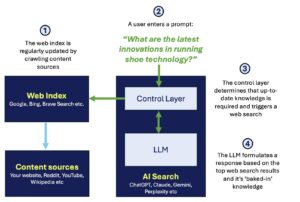
What Is LLM SEO?
LLM SEO is the process of optimizing website content so that large language models can clearly understand, retrieve, interpret, and potentially reference the information within it.
Traditional SEO primarily aims to improve a webpage’s visibility in search engine results. LLM SEO adds another layer: making information understandable and useful within AI-powered search experiences.
For example, consider a user asking:
“What are the best ways to improve technical SEO for an ecommerce website?”
A traditional search engine may return several relevant webpages.
An AI-powered search experience may instead synthesize information from multiple sources and provide a summarized response. If your website contains clear, authoritative, well-structured information, it may become one of the sources considered by the system.
This means businesses increasingly need to think about how information is presented, not just which keywords appear on a page.
Why Is LLM SEO Becoming Important?
People are increasingly using conversational interfaces to research products, services, companies, and questions.
Instead of searching only with short phrases such as:
“technical SEO ecommerce”
users can ask much more detailed questions:
“What technical SEO problems should I check first on a Shopify store with thousands of product pages?”
The second query contains more context and intent.
AI systems are designed to interpret language and context, which means content needs to communicate ideas in a way that is easy to understand.
This does not mean traditional SEO has become irrelevant. In fact, SEO remains an important foundation because AI-powered search systems still need discoverable and accessible information to retrieve.
Elsner’s reference guide makes a similar distinction between traditional search visibility and visibility within AI-generated responses.
A practical way to think about the relationship is:
SEO → Crawlability + Indexing + Search Visibility
AEO → Direct Answers + Question-Based Content
GEO → Visibility Across Generative Search
LLM SEO → Content That AI Models Can Understand and Use
These approaches can overlap and should generally work together rather than being treated as isolated strategies.
How Do AI Models Find Website Content?
One of the most important concepts in LLM SEO is understanding that not every AI response is generated from the same type of information.
Some information can come from a model’s previously learned knowledge, while other AI search experiences can retrieve information from current webpages when answering a query.
Training Data
Training data refers to information used when developing a model.
Website owners don’t have a direct mechanism for controlling whether a particular future model learns from their pages. Therefore, businesses should not build an SEO strategy around the assumption that publishing something today guarantees that it will become part of a model’s permanent knowledge.
Retrieval
Retrieval is different.
When an AI system can access current information, it may search or retrieve relevant sources while generating an answer.
This makes traditional SEO fundamentals extremely important.
If your website:
- Cannot be crawled
- Has important pages blocked
- Contains unclear content
- Has outdated information
- Provides little original value
- Has weak topical authority
then an AI system may have less useful information to retrieve from your website.
Elsner’s reference article emphasizes this distinction between static training knowledge and retrieval from currently available sources.
1. Make Your Main Topics and Entities Clear
One of the foundations of LLM SEO optimization is entity consistency.
An entity can be a:
- Brand
- Person
- Product
- Service
- Organization
- Location
- Technology
- Industry concept
Suppose a company calls one product “Pro SEO Audit” on its homepage, “Professional SEO Analysis” on its services page, and “SEO Website Audit Package” on another page.
These phrases may describe the same service, but inconsistent naming can make the relationship between the pages less obvious.
Businesses should establish consistent terminology across:
- Homepage
- Service pages
- Product pages
- Blog content
- About page
- Author profiles
- Structured data
- Social profiles
This helps search engines and AI systems build a clearer understanding of what the business actually offers.
Practical example
Instead of repeatedly using vague phrases such as:
“our advanced solution”
clearly identify the entity:
“Our technical SEO audit evaluates crawlability, indexation, canonicalization, structured data, Core Web Vitals, and internal linking.”
The second version gives a system more useful information to interpret.
2. Structure Content for Direct Answers
AI systems need to identify useful information efficiently.
That makes content structure particularly important.
Instead of writing long introductions before answering a question, start the relevant section with a direct explanation.
For example:
Weak structure
Several paragraphs discussing search trends → general background → marketing discussion → finally the definition.
Clear structure
What is LLM SEO?
LLM SEO is the process of optimizing content so AI systems can understand and potentially reference information from a website.
Then explain:
- How it works
- Why it matters
- Examples
- Implementation
- Limitations
This structure benefits users as well as AI systems.
Use descriptive headings such as:
- What Is LLM SEO?
- How Does LLM SEO Work?
- How Can You Optimize Content for AI Search?
- What Is the Difference Between GEO and LLM SEO?
- How Do You Measure AI Search Visibility?
Question-based headings can make a page easier to navigate and can align content with conversational search behavior.
3. Build Content Around Topics, Not Keyword Variations
One of the biggest mistakes in AI search optimization is treating LLM SEO as simply another keyword-stuffing technique.
Repeating:
LLM SEO, LLM SEO strategy, LLM SEO services, LLM SEO optimization
throughout an article does not automatically make the content more useful.
Instead, build comprehensive topical coverage.
For an article about LLM SEO, related concepts might include:
- AI search
- Large language models
- Generative search
- GEO
- AEO
- AI Overviews
- Search intent
- Entity optimization
- Structured data
- Content authority
- Citations
- Retrieval
- Semantic search
- E-E-A-T
- Knowledge graphs
The objective is to explain the topic comprehensively while maintaining natural language.
4. Give AI Systems Information Worth Referencing
If every website publishes essentially the same generic explanation, there is little reason for an AI system to prefer one source over another.
This is why original and genuinely useful information can become an important part of an LLM SEO strategy.
Consider adding:
Original Research
Publish data collected from your own customers, campaigns, surveys, or website analysis.
Original Examples
Instead of repeating generic advice, demonstrate how a specific SEO issue was identified and resolved.
Expert Insights
Include information from people with relevant experience and clearly identify the author or contributor.
Proprietary Frameworks
If your company has a unique process, explain it.
Case Studies
Show what changed, what was tested, and what the outcome was.
This approach gives your content information that is more distinctive than another rewritten version of the same commonly available article.
Elsner’s current guide similarly emphasizes original data, frameworks, documented processes, and useful information as potential sources of citable value.
5. Strengthen Your Website’s Authority Beyond Your Own Pages
LLM SEO isn’t only about what your company says about itself.
Your broader online presence can also matter.
For example, a business may have:
- Industry publications mentioning the brand
- Relevant third-party reviews
- Expert interviews
- Guest contributions
- Industry directories
- Partnerships
- Digital PR coverage
- Author profiles
- Relevant backlinks
Imagine two businesses publish similar articles.
One has little information about it outside its own website, while the other has consistent references across reputable industry sources.
A search or AI system has more external context available about the second business.
This is why off-page SEO, digital PR, brand mentions, and authority building remain relevant in an AI-search environment.
6. Use Structured Data Carefully
Structured data helps search engines interpret specific information on a webpage.
Depending on the content, relevant schema types may include:
- Article
- Organization
- Product
- LocalBusiness
- BreadcrumbList
- FAQPage
- Review
- Person
For example, Product structured data can communicate information such as:
- Product name
- Brand
- Price
- Availability
- SKU
- Review information
For an ecommerce website, this can provide a clearer machine-readable representation of the product.
However, schema should not be treated as a magic technique that guarantees an AI citation.
Its primary value is helping machines interpret the information and relationships represented on the page.
7. Optimize Ecommerce Content for AI Search
Ecommerce businesses have additional opportunities because AI-powered shopping experiences need detailed product information.
A product page should clearly communicate information such as:
Product name → Category → Material → Size → Features → Compatibility → Price → Availability → Shipping → Returns
A vague product description such as:
“Premium, stylish and comfortable product designed for modern customers.”
doesn’t provide much useful information.
A better description explains exactly what the product is, who it is for, its dimensions, materials, use cases, and important specifications.
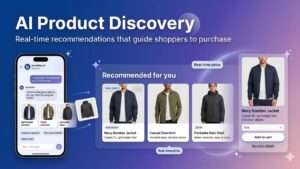
Product Reviews Can Add More Context
Reviews can also provide useful information because they often describe real-world experiences.
For example, customers might mention:
- Fit
- Durability
- Ease of use
- Product quality
- Compatibility
- Common problems
- Specific use cases
A business should not manipulate reviews simply to create AI-friendly content. Instead, genuine customer feedback can provide additional context around the product.
Create Useful Buying Guides
Ecommerce websites can also create supporting content such as:
- Product comparisons
- Buying guides
- “How to choose” articles
- Product FAQs
- Use-case guides
- Size guides
- Compatibility guides
This creates a deeper information ecosystem around the product rather than leaving the AI system with only a short product description.
Elsner’s reference material specifically highlights product data, reviews, comparisons, and category-level buying guidance as important areas for ecommerce-focused LLM SEO.
8. Keep Your Content Fresh and Accurate
AI search is particularly sensitive to topics that change frequently.
Consider information such as:
- Software pricing
- Product availability
- Platform features
- Search engine updates
- Regulations
- Statistics
- Technology specifications
An article published several years ago may contain information that is no longer correct.
Create a content refresh process.
For example:
Quarterly review: Important evergreen content
Monthly review: Fast-changing technology or product content
Immediate update: Major platform, product, pricing, or policy changes
During a refresh, don’t simply change the publication date. Review the actual information and improve the content where necessary.
9. Create Content Around the Entire Search Journey
A single article rarely answers every question a user has.
Suppose your main topic is:
Technical SEO for Ecommerce
Related questions could include:
- What is technical SEO?
- Why is technical SEO important for ecommerce?
- How do I fix duplicate product pages?
- How should ecommerce sites handle canonical URLs?
- How do I optimize product filters?
- What causes crawl budget issues?
- How should Shopify sites handle technical SEO?
- How do I improve ecommerce Core Web Vitals?
Creating useful content around these related questions builds a stronger topic cluster.
Internal links can then connect these pages.
This helps users navigate the subject while giving search engines a clearer understanding of relationships between topics.
LLM SEO vs SEO vs AEO vs GEO
These terms are often used interchangeably, but they can describe different areas of search optimization.
| Approach | Main Focus |
| SEO | Organic search visibility |
| AEO | Direct answers and answer-focused search |
| GEO | Visibility in generative search experiences |
| LLM SEO | Making content understandable and useful to language models |
In practice, these strategies overlap considerably.
A technically strong website with poor content will have problems.
A well-written article that search engines cannot crawl also has limited visibility.
And content that ranks well but provides little useful or distinctive information may not have much value in AI-generated answers.
The strongest approach is therefore to maintain the traditional SEO foundation while improving content clarity, authority, structure, and usefulness for AI-driven discovery.
Common LLM SEO Mistakes to Avoid
Treating LLM SEO as Keyword Stuffing
Adding dozens of AI-related keywords does not make an article more useful.
Publishing Generic AI-Generated Content
Content that simply summarizes information already available across hundreds of websites may struggle to provide a meaningful reason for reference.
Ignoring Traditional SEO
AI search optimization does not eliminate technical SEO, crawlability, indexing, internal linking, or website architecture.
Making Unsupported Claims
If your content includes statistics, research findings, or strong factual claims, provide reliable sources.
Inconsistent Entity Information
Your company name, products, services, locations, and other important entities should be represented consistently.
Creating Thin Content
A 500-word page that barely answers a complex question may not provide enough useful context.
Ignoring Off-Page Authority
Your website isn’t the only source of information about your brand. Relevant external references can contribute to your broader online presence.
How to Measure LLM SEO
Measuring AI search visibility is still developing, so businesses should avoid treating every AI visibility metric as equivalent to traditional Google rankings.
Useful indicators can include:
- Brand mentions in AI-generated answers
- Citations of your webpages
- Referral traffic from AI platforms
- Branded search growth
- Organic traffic trends
- Assisted conversions
- Mentions across third-party websites
- Visibility for important conversational queries
You can also perform manual testing.
Create a list of commercially relevant prompts such as:
“Best SEO agencies for ecommerce brands”
“How can an online clothing store improve organic traffic?”
“What should a small business check before investing in SEO?”
Then test these prompts periodically across the AI platforms relevant to your audience.
Record:
- Whether your brand appears
- Which competitors appear
- Which sources are cited
- Which pages are referenced
- How your brand is described
- Whether the information is accurate
This creates a practical baseline for measuring AI-search visibility.
The reference material also notes that AI visibility measurement is still less mature than conventional rank tracking, so current tools should be interpreted as directional rather than treated as perfectly precise measurements.
A Practical LLM SEO Checklist
Before publishing or updating an important page, check the following:
- Is the main topic immediately clear?
- Does the introduction answer the primary question?
- Are important entities named consistently?
- Are headings descriptive and logical?
- Does each section provide a useful answer?
- Are important claims supported by reliable sources?
- Is the information current?
- Does the page include original insights or examples?
- Is relevant schema implemented correctly?
- Is the page crawlable and indexable?
- Are related pages connected through internal links?
- Does the website have relevant external authority?
- Have you covered important related questions?
- Have you tested important queries across relevant AI platforms?
The Future of LLM SEO
LLM SEO should not be viewed as a replacement for traditional search engine optimization.
Instead, it is an extension of the broader shift toward AI-powered search and conversational discovery.
People are increasingly asking complete questions rather than simply entering isolated keywords. Search experiences are becoming better at understanding context, combining information, and presenting direct answers.
For businesses, this means content strategy needs to evolve.
The goal is no longer simply to produce a page containing the right keywords. The goal is to create information that is clear, accurate, authoritative, structured, current, and genuinely useful.
That foundation can support visibility across traditional search as well as emerging AI-powered discovery experiences.
Final Thoughts
A strong LLM SEO strategy starts with the same fundamentals that have always mattered in good SEO: technically accessible websites, useful content, strong information architecture, relevant authority, and a clear understanding of user intent.
The difference is that AI search introduces another layer of interpretation.
Your content needs to make sense not only to a person scanning a webpage, but also to systems trying to understand:
What is this page about?
Who or what does it refer to?
Is the information trustworthy?
Does it directly answer the question?
Is there a reason to use this source over another?
Businesses that focus on these fundamentals can build content that is useful across multiple search environments instead of optimizing exclusively for one interface.
Ready to Optimize Your Website for AI Search?
AI search is changing how people discover information, products, and businesses. If your website is still relying only on traditional keyword targeting, it may be time to review your content, technical SEO, entity signals, structured data, and authority strategy.
Need help improving your website’s visibility across traditional and AI-powered search? Get in touch for a customized SEO and AI search optimization strategy designed around your business goals.
Frequently Asked Questions
What is LLM SEO?
LLM SEO is the process of optimizing website content so large language models can understand, retrieve, interpret, and potentially reference the information when generating AI-powered answers.
Is LLM SEO the same as traditional SEO?
No. LLM SEO and traditional SEO overlap, but their primary objectives differ. Traditional SEO focuses heavily on organic search visibility, while LLM SEO focuses on making information understandable and useful within AI-powered search and answer experiences.
Is LLM SEO the same as GEO?
They are closely related but are not necessarily identical. GEO, or Generative Engine Optimization, generally refers to optimizing for visibility across generative search experiences. LLM SEO focuses more specifically on making content understandable and usable by language models.
Does schema guarantee AI citations?
No. Structured data can help search engines interpret information, but it does not guarantee that an AI system will cite or mention a webpage.
How can I make my content more visible in AI search?
Focus on clear answers, consistent entities, strong topical coverage, accurate information, original insights, structured content, technical accessibility, authoritative external references, and appropriate structured data.
Is AI-generated content good for LLM SEO?
The method of producing content is less important than the quality and usefulness of the final content. Pages that provide little original value, contain inaccuracies, or exist primarily to manipulate search visibility can be problematic regardless of whether they were produced manually or with AI assistance.